

2025 | Twin Cities Metropolitan Area, Minnesota
My Journey with the 2025 Metropolitan Council 4-H Climate Action Project
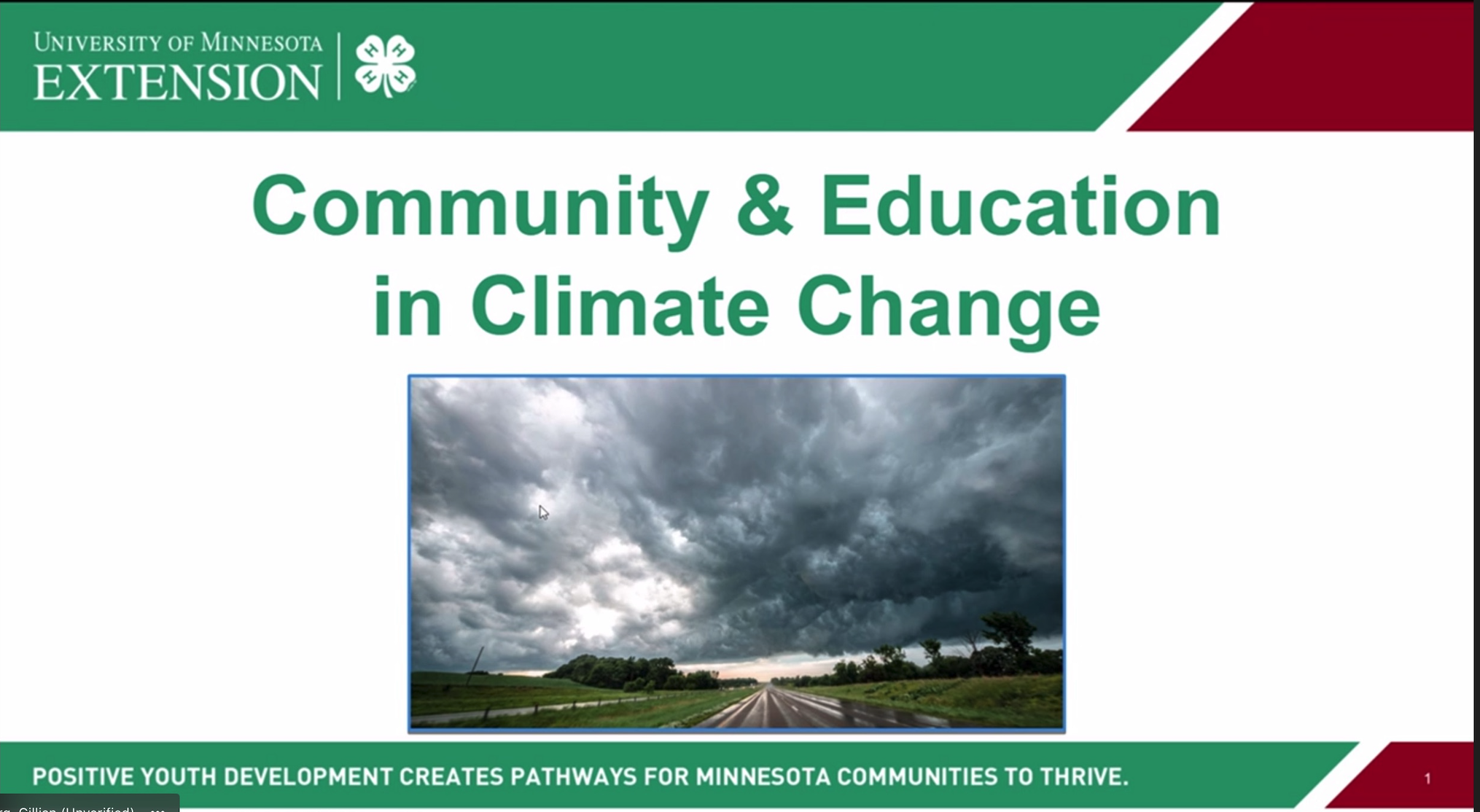
Before founding Earth on Us, I had the opportunity to participate in the Metropolitan Council 4-H Climate Action Project, a collaborative initiative led by University of Minnesota Extension 4-H and the Metropolitan Council. Looking back, this experience played a major role in shaping my understanding of climate education, community engagement, and the importance of turning environmental awareness into action.
Working alongside mentors Gillian and Leah, I joined a team of youth leaders from across the Twin Cities metro area to explore how communities view climate change and what actions residents consider most important for addressing it.
Learning Through Research
The project began with climate action workshops that introduced participants to climate science, community engagement, and survey research methods.
As part of the project, I helped conduct community surveys and interviews to better understand local climate priorities. The work involved several steps:
Through this process, I learned that environmental challenges are not just scientific issues—they are also community issues. People’s experiences, concerns, and priorities help shape how communities respond to climate change.
Sharing Community Voices
After analyzing the survey data, our team worked together to summarize the findings and develop presentations that could be shared with local leaders and stakeholders.
I had the opportunity to serve as a lead presenter, representing our youth team at several County Extension Committee meetings across the Twin Cities metropolitan area, including Carver County, Ramsey County, Anoka County and Washington County. During these presentations, we shared what we had learned from community members and discussed how local governments, organizations, and residents can work together to address climate-related challenges.
Presenting to community leaders was both exciting and intimidating. It was one of my first experiences speaking to decision-makers and adults in leadership positions about environmental issues. The experience strengthened my communication skills and showed me that young people can contribute meaningful ideas to important community conversations.
Positive Community Response
The presentations were well received by community leaders. Following one of our presentations to the Anoka County Extension Committee, the Committee Chairperson, Mr. Reid Mortenson, sent the following feedback:
“Thank you for a very wonderful, informative and well delivered presentation by students yesterday!“
Receiving positive feedback from community leaders reinforced the value of youth engagement in environmental work and demonstrated that student voices can have a meaningful impact.
The Beginning of Earth on Us
While participating in the Climate Action Project, I noticed a recurring theme in both the survey responses and community discussions: many people cared about environmental issues but were unsure what actions they could take in their daily lives.
That observation stayed with me.
Over time, it inspired me to create Earth on Us, a youth-led environmental education initiative focused on helping students and families turn environmental awareness into practical everyday actions. Activities such as Recycle Right, Bring My Water Bottle, and other Earth on Us lessons grew from the belief that meaningful environmental change often begins with simple habits practiced consistently.
The Climate Action Project showed me that education and action go hand in hand. Research helps us understand community needs, while education empowers people to make informed decisions.
Gratitude
I am deeply grateful to Leah, Gillian, Lucy, and Anne, as well as the University of Minnesota Extension 4-H and Metropolitan Council teams, for their mentorship, encouragement, and support throughout the project.
Their guidance provided one of my earliest opportunities to engage in community-based environmental research and public outreach. The experience not only strengthened my leadership and communication skills but also helped inspire the creation of Earth on Us.
As Earth on Us continues to grow, I often think back to that project as the starting point of my journey from climate research to climate action.
Thank you to everyone who made that experience possible! ♻️ ??


