
February 27, March 1 | Twin Cities, Minnesota
Scientific research is rarely a straight path. It requires curiosity, perseverance, critical thinking, and the willingness to defend your ideas through evidence. This spring, Earth on Us founder Daniel experienced all of these firsthand as he presented his independent environmental research at the Twin Cities Regional Science Fair (TCRSF).
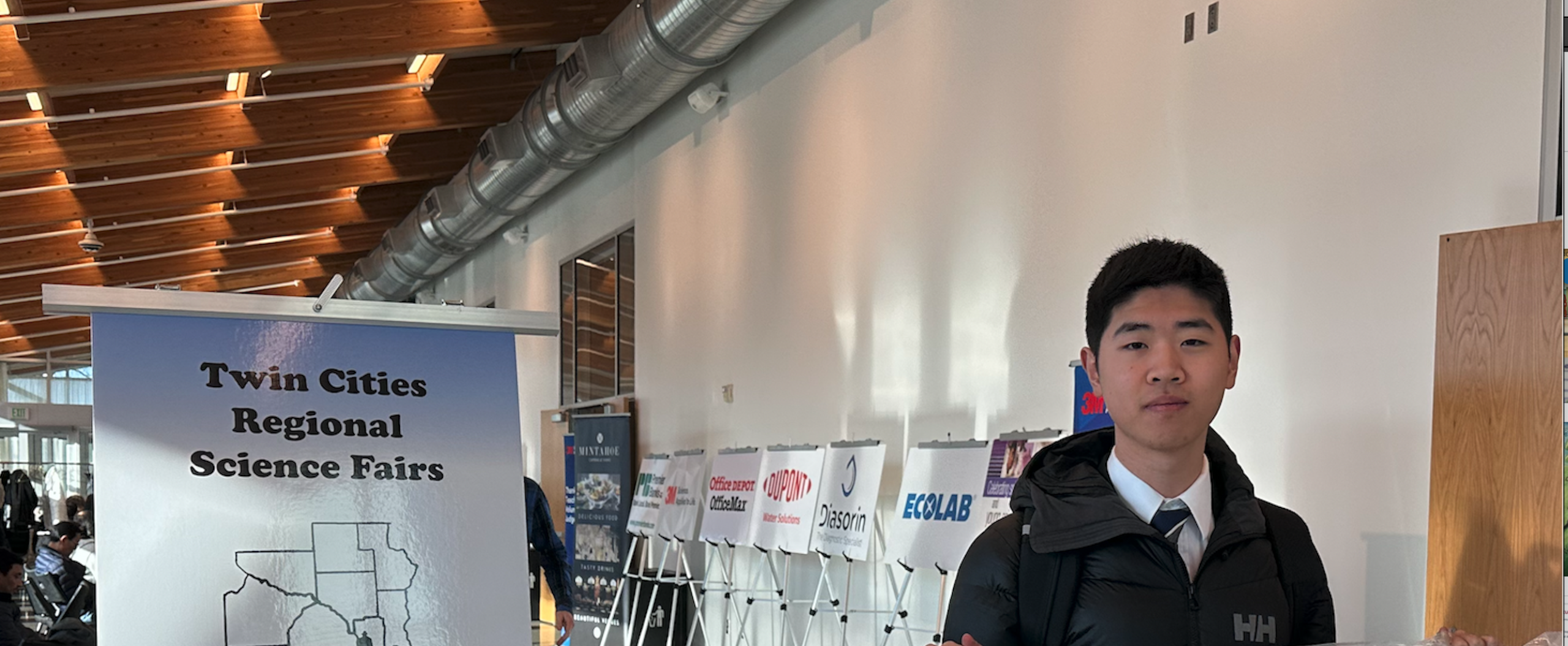
On February 27, 2026, Daniel presented his project, investigating PFAS public water contamination and its association with community cognitive disease, to a panel of judges during the TCRSF judging day. His research investigated whether county-level PFAS contamination in public drinking water was associated with differences in the prevalence of cognitive diseases. The project combined publicly available environmental monitoring data, demographic and socioeconomic information, air pollution, urban status and health datasets to better understand a growing public health concern.
Throughout the judging sessions, Daniel had the opportunity to explain his research methods, statistical analyses, and findings to experts from a variety of scientific backgrounds. The judges asked thoughtful questions about his study design, data sources, and interpretation of the results. Their feedback challenged him to think more deeply about the strengths and limitations of ecological studies and helped strengthen his understanding of environmental epidemiology.
Like many research competitions, Daniel also encountered differing viewpoints from judges with diverse professional experiences. While not every conversation led to agreement, the experience reinforced an important lesson in science: progress depends on open discussion, careful analysis, and evidence-based reasoning. Learning to respectfully defend research findings is an essential part of becoming a scientist.
The awards ceremony on March 1, 2026, brought exciting news. Daniel’s project received recognition from multiple organizations, earning a few awards:
- GENIUS Olympiad Award, qualifying him to compete internationally in environmental science.
- NOAA “Taking the Pulse of the Planet” Special Award, recognizing excellence in environmental research.
- Stockholm Junior Water Prize (SJWP) Award, honoring innovative research related to water quality and sustainability, qualifying him to compete at the state level.
- Purple Ribbons for both research paper and project, qualifying him to compete in Minnesota Science & Engineering Fair (Daniel was unable to attend it due to a scheduling conflict with the National Leadership Conference).
Although the project did not advance to the International Science and Engineering Fair (ISEF) through the TCRSF, the recognition it received from national and international scientific organizations affirmed the significance of the research and encouraged Daniel to continue exploring the impacts of PFAS contamination on human health.
The project did not end with the regional science fair. Inspired by the feedback he received, Daniel continued refining his research, expanding his analyses, and pursuing additional opportunities to share his work. Those efforts ultimately led to his participation in the 2026 Internatinal GENIUS Olympiad as a finalist.
Research competitions are about much more than awards. They provide valuable opportunities to communicate science, receive constructive feedback, and learn from experts and fellow students. Daniel’s experience at TCRSF strengthened both his scientific skills and his commitment to addressing environmental challenges through research.
At Earth on Us, we believe that meaningful environmental action begins with asking important questions, following the evidence, and sharing knowledge with others. Daniel’s journey is one example of how young researchers can contribute to understanding complex environmental issues while inspiring others to make a positive impact.